
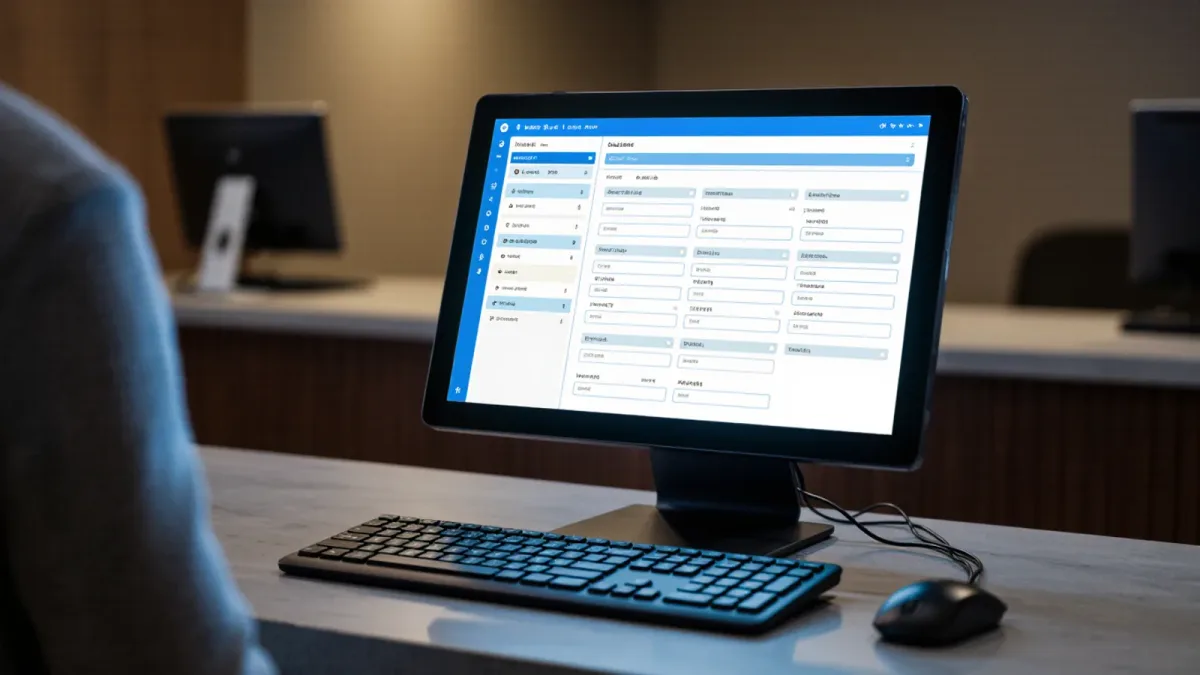
The property management system, or PMS, is the software that holds a hotel's room inventory, reservations, guest folios and rate information — the system of record every other hotel technology ultimately answers to. Channel managers, payment platforms, door locks, housekeeping apps and revenue tools all read from it or write to it, which is why the PMS decision outlives most other technology decisions a operator makes.
This explainer maps the stack as it actually runs in a property, and where it fails.
What does the PMS actually do?
Four jobs: it tracks availability and sells against it; it carries each reservation from booking through check-in, room assignment, charges and checkout; it produces the folio and the associated payments; and it reports the numbers — occupancy, rate, revenue by segment — that everything downstream, from owner reports to channel performance reviews, is built on. If the PMS data is wrong, every dashboard on top of it is confidently wrong too.
For operators, the practical consequence is that PMS data hygiene — correct room types, closed dates, clean rate codes — is an operations discipline, not an IT preference.
What plugs into a modern PMS?
The common connections in a mid-size property:
- Channel manager and booking engine — distribute inventory to OTAs and the hotel website, and push reservations back into the PMS.
- Payment processing — tokenized card handling tied to the folio, with chargeback and refund workflows.
- Door lock and guest access — key encoding or mobile keys driven by check-in status.
- Housekeeping and maintenance apps — room status updates flowing both directions so the front desk sells only clean, sellable rooms.
- Revenue management and rate shopping — tools reading pace and compression data, writing rate recommendations or rates directly.
- Accounting exports — nightly journal entries to the property's financial system.
Related stories: What actually happens at hotel check-in, and why it can take so long · Hotel loyalty programs from the guest's side: what points, tiers, and benefits are actually worth.
Where do integrations break?
Three failure patterns recur. First, the two-way sync that is really one-way-plus-batch: a cancellation on the OTA side that reaches the PMS hours late, producing an oversell on a sold-out night. Second, the rate-code sprawl that accumulates as properties add packages, until reports can no longer be compared across periods. Third, guest-data fragmentation — the CRM, the PMS and the POS each holding part of the same guest, so recognition at the desk depends on which system the agent opens.
Vendors describe their integrations in the best case; operators should ask which direction data flows, how fast, and what happens when the interface is down. A vendor's claim about its own connectivity is a statement, not a verification.
Cloud or on-premise?
The market has moved to cloud PMS: updates arrive without site visits, remote work and mobile operations are native, and vendor security posture matters more than local servers. That shift moves the operator's security attention to access control — who can reach guest data, from which devices — and to vendor practices. Frameworks such as those published by the US National Institute of Standards and Technology give properties a baseline for evaluating vendor security claims rather than accepting them at face value.
The stack is not a shopping list; it is a hierarchy. Operators who fix the system of record first, and add tools that integrate cleanly with it, spend less time reconciling and more time selling rooms.