
A business hotel stay is a productivity problem wearing hospitality clothes. The traveler arrives tired after a delayed flight, works that evening, sleeps on a deadline, eats against a meeting schedule, and departs with a folio that must justify itself to an expense system. Everything the property does either removes friction from that sequence or adds to it — and the features that decide repeat corporate bookings are surprisingly short: predictable arrival, a workspace that works, internet that does not require troubleshooting, and food timed to a working day. Per diem context frames the budget side: US government travelers book against General Services Administration per diem rates that cap lodging by market, and corporate travel policies increasingly mirror that discipline.
What does the arrival need to be?
Predictable and invisible. The business traveler's preference, expressed in every loyalty program's design, is to skip the desk: mobile check-in, a chosen room, and a digital key convert arrival from a transaction into a walk. The desk's role for this guest concentrates in exceptions — the early arrival before noon, the guaranteed late arrival after a cancellation, the folio split between personal and corporate cards. That last one deserves attention from bookers: reservations with two payment methods specified in advance process cleanly at checkout; the traveler who mentions the split at the desk on a busy Tuesday morning creates the queue everyone behind them resents.
What should the room deliver for work?
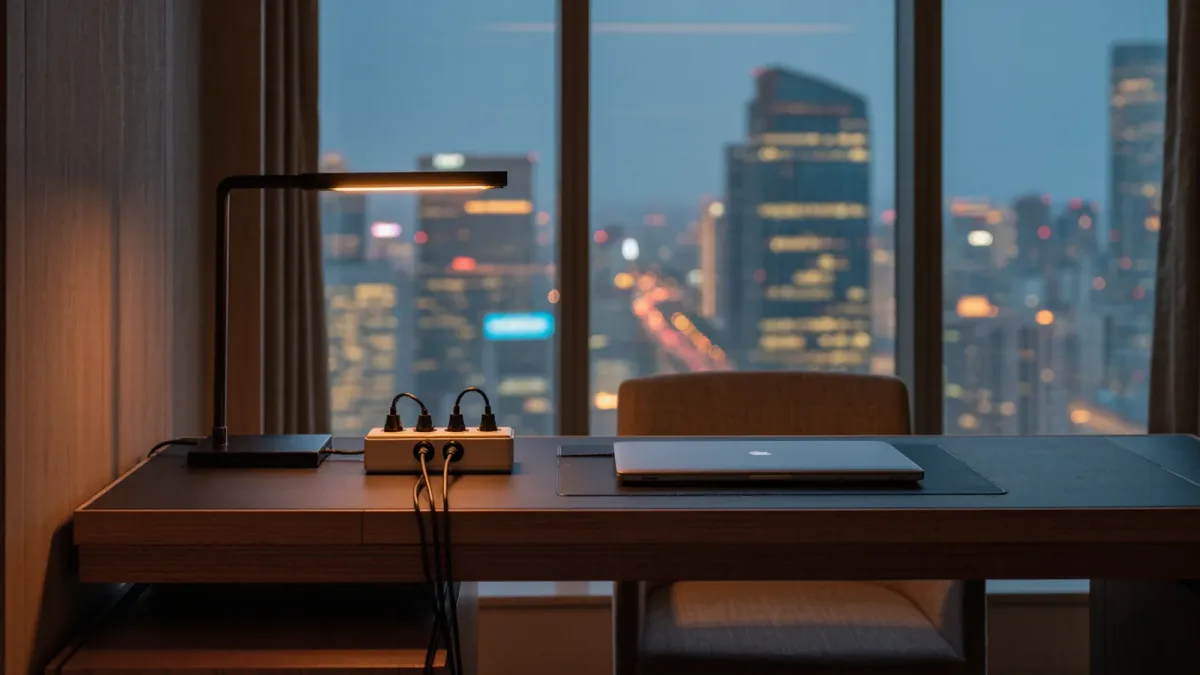
Four verifiable features outrank decor. A desk at desk height with a chair that survives two hours — the folded-luggage-stand desk of some renovated rooms fails this test the first evening. Power at the bedside and the desk, in the plug formats the traveler's devices use, without crawling behind furniture. Lighting that permits evening work without illuminating a sleeping partner. And acoustic separation from the elevator, ice machine, and corridor — the same quiet-room logic any guest needs, weighted heavier by someone whose morning meeting depends on the night's sleep.
Iron and board, sufficient towels, and blackout coverage complete the standard; everything beyond it is segment positioning rather than function.
Related stories: Front office throughput: the check-in queue is a labor and revenue problem, not a hospitality anecdote · F&B as a profit center: the breakfast equation, the minibar question, and what actually earns.
How important is the internet, really?
It is the single most common dealbreaker. Corporate travelers need video-call-grade upload and a login process that works on every device the first time; a captive portal that times out mid-day, or a network that drops during a client presentation, converts a mid-priced stay into a complaint no amenity recovers. Properties that invest once in business-grade bandwidth and skip the daily reconnect ritual earn disproportionate loyalty in this segment, because the traveler experiences the difference every single stay — while thread-count upgrades register only on the first visit.
What does food service get wrong for business guests?
Timing and speed. Breakfast that starts at 6:30 rather than 7 captures the pre-meeting crowd; a grab-and-go case matters as much as the hot line, because the traveler's breakfast is frequently a phone call. Room service at dinner competes with the traveler's fatigue and inbox, so a short menu delivered in fifteen minutes beats an ambitious one in thirty-five. And the bar's real function in a business hotel is the solo dinner and the informal meeting, which is why outlet seating and reliable single-diner service — no awkward pairing of parties, no table-for-four banishment — earn more repeat corporate stays than any cocktail program.
What does the expense report demand?
A clean folio and a rate that maps to policy. Travelers need itemized charges that separate room, tax, and incidentals; corporate rates booked through a company program should appear coded correctly; and loyalty-night stays that mix personal and business payment need the split handled at checkout, not reconstructed from a PDF in October. Properties serving heavy corporate demand make the folio frictionless — emailed automatically, formatted for the major expense platforms, and correct the first time — because the receipt is the last impression of the stay and the one the traveler's finance department audits.
For operators, the business segment books on location and rate but returns on friction: every step removed from arrival, connectivity, breakfast, and checkout compounds across dozens of nights a year.
None of this requires luxury positioning. It requires reliability engineering — the desk staffed for exceptions, the network built for video, the breakfast window wide enough for a 7:30 flight-report meeting, and the folio clean enough to file without editing. That is the whole product, and the traveler who gets it for forty consecutive nights a year never rate-shops again.