
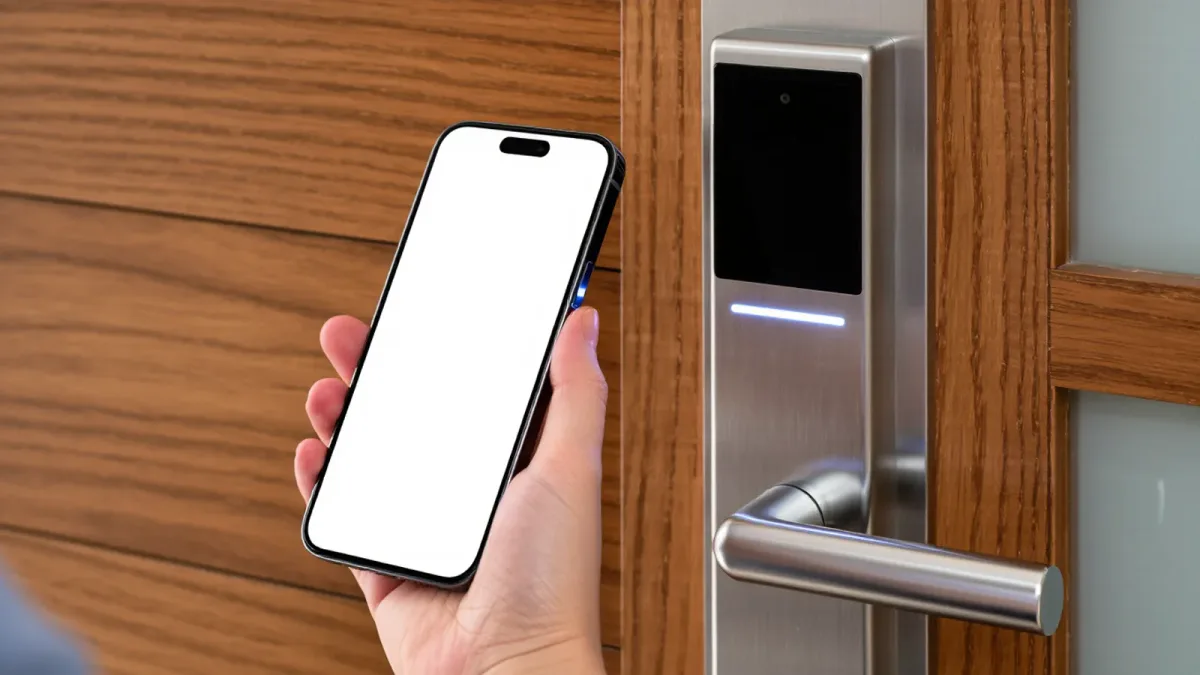
A digital hotel key is a cryptographically limited credential delivered to the guest's smartphone, which unlocks the guestroom door over Bluetooth — increasingly also over NFC, the same radio the plastic card uses. The guest checks in through the brand's app, receives the key after identity and payment verification, and skips the desk entirely, walking from elevator to door with the phone as the only token. As of 2025, the largest US groups support mobile keys at a substantial majority of their portfolios — Hilton's Digital Key program, per company announcements, reaches a large share of its properties — making the phone key the default arrival path for loyalty members at full-service brands.
How does the credential actually work?
The access-control chain runs from the property's locking system to the guest's phone. The hotel's key management system issues an encrypted key tied to the reservation: room number, valid dates, sometimes floor and common-door permissions. The app stores it; the lock validates it over Bluetooth, comparing the credential against its own revocation list. Range is deliberately short, and the unlocking gesture — hold the phone near the reader or the handle — is the same at every participating brand because most chains source locks from the same handful of manufacturers.
NFC keys bring the interaction closer to the plastic card: the phone is tapped against the reader and works even when its battery is dead on newer handsets, which addresses the single most common failure in the Bluetooth flow.
What goes wrong in practice?
Four failure modes account for most corridor frustration. Phone battery: a Bluetooth key lives or dies with the handset, which is why properties keep desks staffed for the fallback. Door hardware drift: a lock with a failing battery or outdated firmware can reject valid credentials that its neighbor accepts. Room moves: when the desk reassigns a room, the digital key must be reissued — guests who bypass the desk after a change learn the key opened the old door. And the setup gap: keys delivered before arrival sometimes require a data connection to activate, which penalizes guests landing in roaming or dead zones.
Every brand maintains the plastic-card fallback for these reasons, and desk agents are trained to treat digital-key failures as a card problem with a two-minute solution, not a guest error.
Related stories: Hotel service recovery: what happens after a guest complains, and what actually works · The hotel tech stack explained: what the PMS runs, what plugs into it, and where integrations break.
Is a phone key safe?
The credential model is at least as strong as the card it replaces: keys are encrypted, expire automatically at checkout, and can be revoked centrally the moment a phone is reported lost — faster than canceling a plastic card that may have been cloned anywhere. The guest-side risks are the mundane ones: a shared device hands over room access along with everything else, and phished app credentials expose the booking itself. Hotel operators anchor their access-control security practices in established security frameworks, and the National Institute of Standards and Technology's Cybersecurity Framework is the reference most large hospitality groups' security programs map against.
What does the guest gain beyond skipping the desk?
Three things the plastic card never did. Room selection: at properties with floor-plan selection, the key arrives for a room the guest chose, which quietly resolves the worst part of the assignment queue. Shared access: many systems let a guest distribute keys to family members or colleagues' phones, ending the "one card per room" negotiation. And common-door scope: the same credential opens gyms, lounges, and parking doors after hours — functionality that previously required staffed entries or card swaps.
Which guests should still use the desk?
First-time guests at a property, travelers in a party arriving separately, anyone whose stay involves changes — connecting rooms, rate adjustments, deposit disputes — and guests whose handsets are old enough to lack BLE or NFC support. The digital flow is optimized for the repeat, solo, prepared traveler; the desk remains the exception handler, and the guests above are the exceptions it exists for.
For guests, the phone key is best understood as a pre-arrival transaction: it is earned at check-in, delivered over data, and spent at the door — with the desk as its insurance policy.
The hardware trajectory points one direction: locks sold today are mobile-first, NFC support is spreading from flagships to mid-range handsets, and wallet-based room keys — where the credential lives in the phone's native wallet alongside its payment cards — began reaching hotel pilots in 2024 and 2025. The plastic card will outlive the decade, but it is becoming the fallback, not the default.