
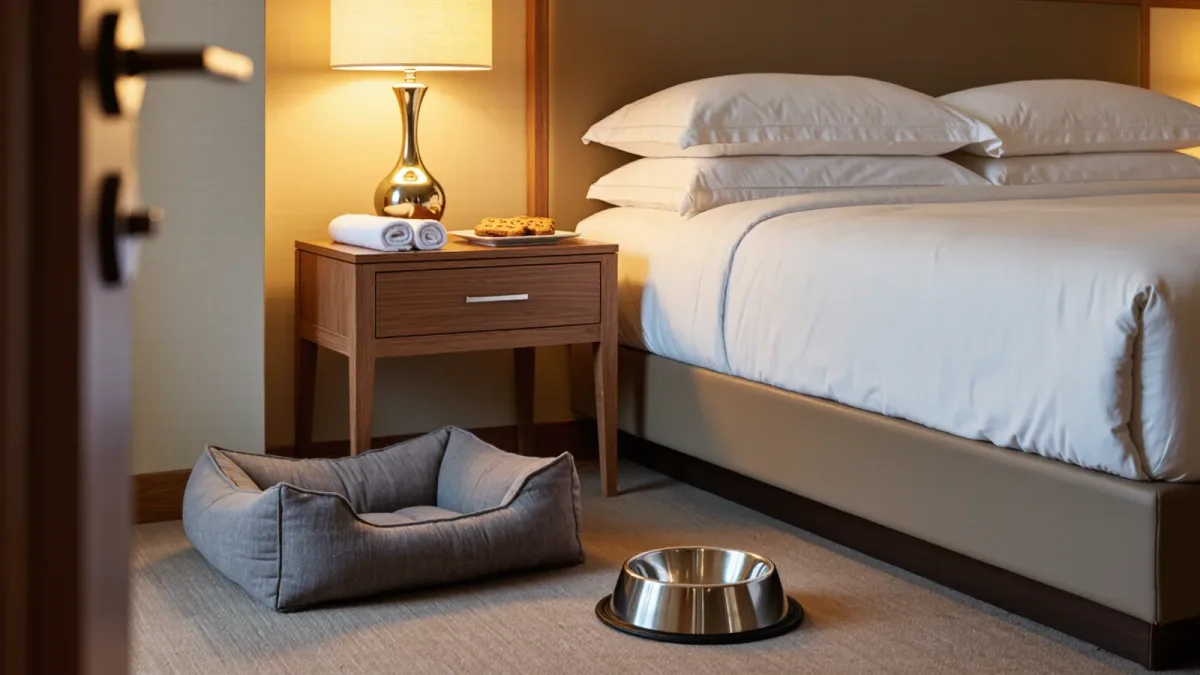
A pet-friendly hotel program is a bundle of rules and amenities attached to stays with animals: a per-stay or per-night fee, size and breed limits, designated floors or room types, and increasingly a service layer of beds, bowls, treats, and waste stations. The bundle is more heterogeneous than any other hotel offering, because pet policies are set property by property even within the same brand — which makes the reservation screen, not the brand promise, the place a stay with a dog is actually decided. Pet ownership in US households remains near two-thirds per industry surveys, and the travel share of that population keeps the segment commercially significant enough for brands to standardize the welcome while leaving the economics to the owner.
What do pet programs typically cost and include?
The fee structure splits into two models: a nightly charge, commonly in the tens of dollars, or a flat per-stay fee — with some resorts charging at levels that rival a mid-tier room night. What the fee buys varies accordingly. The baseline is permission and a deep-clean protocol for the room after checkout. The developed programs add a dog bed and bowls at turndown, treat jars at the desk, designated relief areas with bags, room-service menus for pets, and partnerships with local groomers, walkers, and daycares. The distinction guests should understand: the fee is partly compensation for risk — damage, allergens for the next guest, and the housekeeping minutes of a more demanding room turnover — so it appears even at properties whose pet amenities are a single bowl.
What are the rules that actually surprise guests?
Four recurring ones. Size and breed limits: many properties cap weight — commonly at 25, 50, or 80 pounds depending on the program — and a few restrict breeds regardless of temperament, driven by insurance rather than behavior. Unattended-pet rules: most properties prohibit leaving an animal alone in the room, which shapes whether a pet-friendly hotel works for a guest whose itinerary includes a concert. Designated inventory: pet rooms are often a small subset of rooms on specific floors, which means availability sells out before the hotel does. And the post-stay reality: guests who travel with pets should expect neighboring-guest sensitivities, and housekeeping needs to know the room held an animal — the program's reputation lives or dies on the deep-clean discipline guests never see.
Related stories: Loyalty programs from the operator's chair: who funds the points, and who captures the guest · Noise is the review a hotel cannot answer: what guests hear and what helps.
How do service animals differ from pets?
Categorically. Under the Americans with Disabilities Act, service dogs trained to perform tasks for a person with a disability are not pets: US hotels must accept them without pet fees, without size or breed restrictions, and with only two permitted questions — whether the animal is required for a disability and what task it is trained to perform. Emotional support animals do not hold the same public-accommodation status and are treated under the property's pet policy at most US hotels. Front-desk teams need this distinction trained explicitly, because the costliest pet-policy errors are ADA errors: charging a service-animal fee or refusing a task-trained dog is a federal compliance problem, not a service complaint.
How should a guest book a stay with a pet?
Three checks replace the "pet-friendly" filter with real information. The written policy on the property's page, not the OTA amenity tag — the fee, weight limit, and any unattended-animal rule live there. Inventory confirmation at the property level, because pet rooms can sell out while the hotel shows availability. And honesty about the animal: the guest whose 70-pound dog arrives at a 50-pound program creates a checkout dispute the policy will win. Guests crossing borders with animals face a separate layer entirely — government import rules, including the CDC's requirements for dogs entering the United States, tightened in 2024, now require advance paperwork rather than a vaccination tag at the counter.
For guests, pet-friendliness is a property-level contract, read before booking; for operators, the program's economics are a fee against turnover cost, and its reputation is a housekeeping standard.
The segment rewards operators who publish exact terms and train the desk on the service-animal distinction — the two moves that convert a marketing label into a working program. The pet package itself is decoration; the policy clarity is the product.