
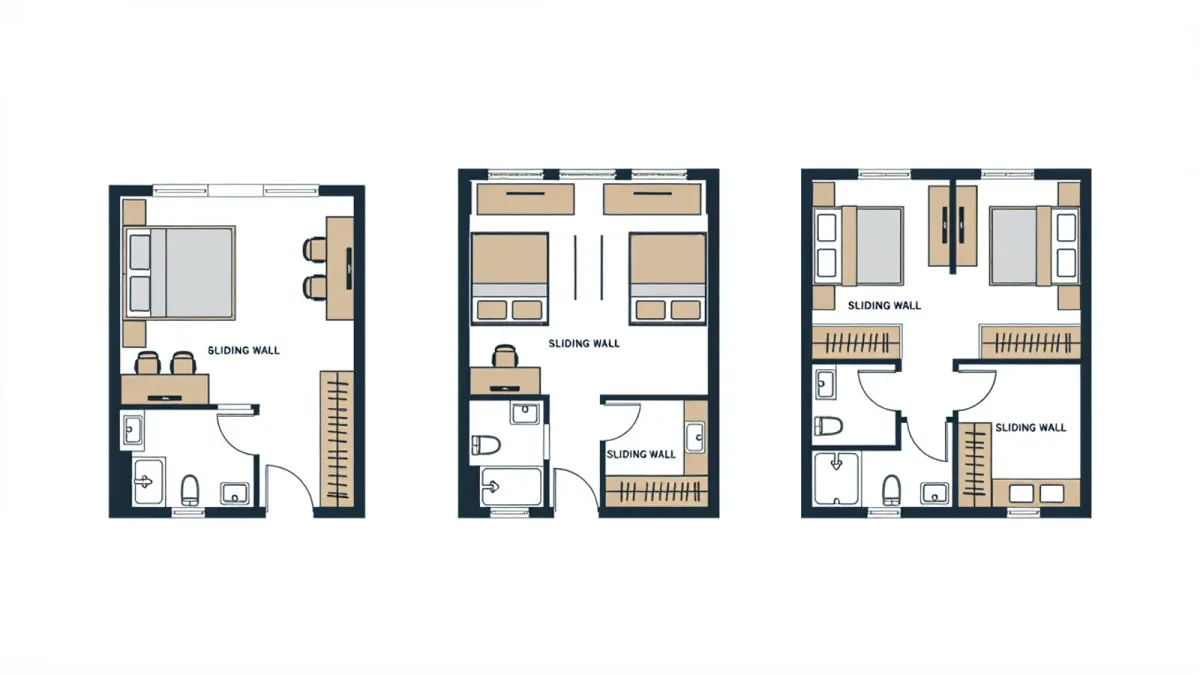
A transforming guest room is a room engineered to reconfigure — a wall slides, a bed folds, furniture rolls — so the same floor area sells as a king room, a family room or a small meeting space depending on the day. The appeal is arithmetic: the largest fixed cost in a hotel is the room, and flexibility raises the revenue a room can capture without adding keys.
For operators, the question is not whether the concept works — it does, in properties from urban micro-hotels to resort family wings — but what it demands from furniture specification, housekeeping and the reservation system.
How do transforming rooms actually work?
Three mechanisms dominate. Movable partitions — sliding or folding acoustic walls — divide one large room into two, each with its own door to the corridor in the best executions. Foldaway beds, from vertical murphy units to wall-hung bunks, convert a lounge or office into a sleeping room. Modular furniture on casters or glides lets guests or staff rearrange a room for work, dining or sleep.
The most successful projects fix the wet areas — bathroom, kitchenette, closet — and let everything else move. Water and ventilation are the expensive things to relocate; dry space is where flexibility is cheap.
Related stories: Lighting the guest room: layered light, warmer evenings, and why one ceiling fixture fails · FF&E procurement: where hotel furniture budgets blow up, and the contract terms that hold the line.
What does the FF&E specification demand?
Moving parts are the specification risk. Murphy mechanisms, sliding wall tracks and casters are hardware that cycles hundreds of times a year, and a failed mechanism takes an entire key out of inventory. Specifications that survive operations share traits: commercial-grade hardware rated for high cycle counts, replaceable wear parts ordered as spares at installation, and furniture that one housekeeper can reconfigure without a two-person lift.
Housekeeping standards also change. A room that converts must be photographed, diagrammed and checked in each configuration, or the property will accumulate rooms set up the wrong way for tonight's arrivals.
What does the PMS have to know?
Inventory complexity is the quiet cost. A transforming room is effectively several room types sharing one space, and the reservation system must sell them as mutually exclusive. Properties handle this with combination codes and same-day inventory rules; where the PMS cannot express the constraint, oversells follow.
Operators considering the format should test the booking logic before the design is fixed — the constraint that is easy to draw is often hard to sell.
When does the format make sense?
The format pays in three situations: high-cost land where every square meter must earn; markets with swinging demand between business and family segments across the week; and extended-stay products where guests value a configurable living space more than a larger static room. It makes least sense in a standardized select-service build, where conversion of room types complicates the brand compliance the franchise fee pays for.
Flexibility is a revenue instrument, and like any instrument it has a maintenance schedule. Operators who count the moving parts, stock the spares and codify the configurations get the upside; those who treat a transforming room as a regular room with a clever bed accumulate downtime.