
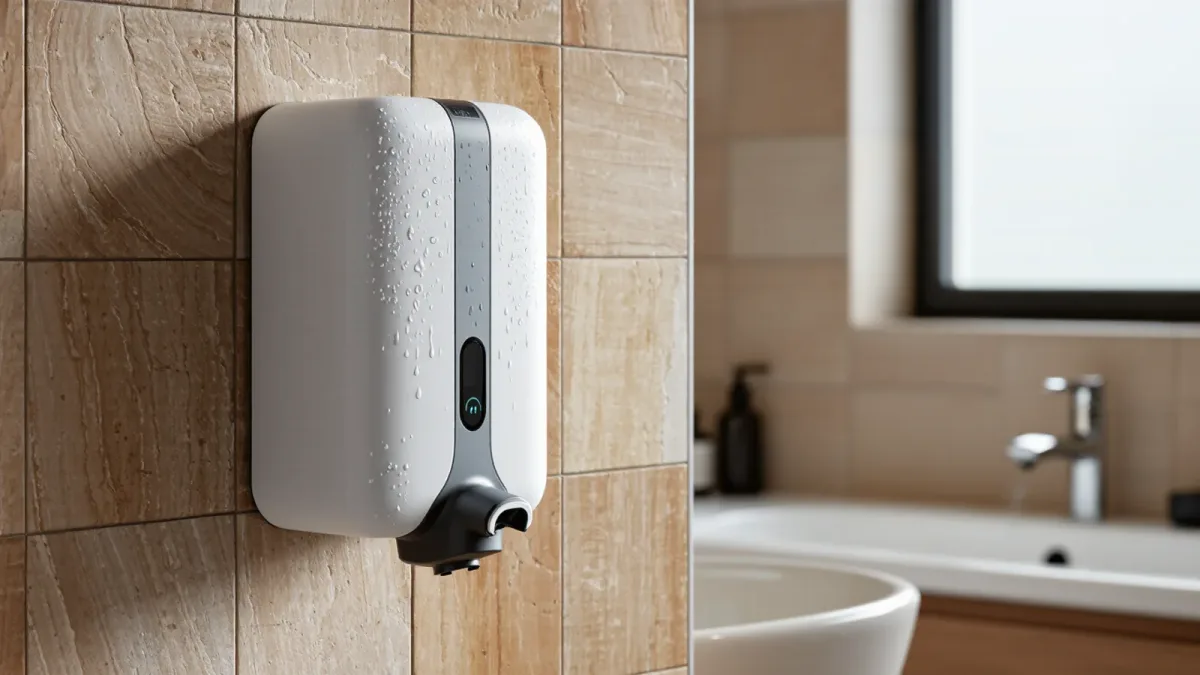
Plastic-free amenity programs replace single-use miniature toiletries, wrapped cups, straws, and packaged cutlery with bulk dispensers and on-request service — and for most hotels the change now runs on regulatory pressure at least as much as on sustainability targets. California law has barred larger hotels from providing tiny plastic toiletry bottles since 2023, and a handful of other US states and the European Union's single-use plastics rules have moved in the same direction, which turns the dispenser decision from a procurement preference into a compliance item for any property operating across jurisdictions.
The operational arithmetic, though, was already settled in favor of bulk before the laws arrived.
What does switching to dispensers actually save?
Three cost lines move together. Product: bulk amenity liquid costs materially less per occupied room than single-dose miniatures, because packaging and filling are the expensive part of a 30-ml bottle. Housekeeping minutes: attendants stop placing, counting, and restocking handfuls of small items each turnover. Waste volume: miniature bottles, caps, and wrapping are precisely the low-density, mixed-material waste that is most expensive to divert from landfill where diversion targets apply.
Against these sit real one-time costs: wall-mounted dispensers and their installation, re-drilled tiling in older bathrooms, and a quality-control burden — dispensers must be refilled, cleaned externally, and checked for label legibility, or they read as cheap. Vendor lock-in is the other trap: sealed cartridges that only accept one supplier's product trade a packaging saving for a purchasing constraint, which operators should price before signing.
What do the laws actually require?
The rules cluster in three families. Toiletry container bans: California's law applies to hotels above a room-count threshold, prohibiting tiny plastic bottles of shampoo and similar products, with penalties set by statute. Single-use plastics directives: the EU's rules on items such as straws, stirrers, and cutlery have applied since 2021 and shape what a resort can place at a pool bar or breakfast table. Accessories-on-request laws: several US jurisdictions require that straws, stirrers, and plastic food accessories be provided only when a guest asks, reversing the default from automatic to opt-in.
For multi-property operators the practical consequence is uniformity: brand standards increasingly specify dispenser amenities globally rather than manage jurisdiction-by-jurisdiction compliance, and franchise documents have been updated accordingly. A property planning a soft-brand conversion should read the amenity clause before budgeting.
Related stories: LEED vs Green Key: which hotel sustainability certification fits which property · Linen reuse programs: the cheapest water a hotel will ever save.
How do guests react to dispensers?
The reaction splits by execution. Well-designed fixed dispensers from recognized amenity brands are broadly accepted, and luxury properties have led the shift with ceramic or glass vessels refilled by housekeeping. The satisfaction risk concentrates in three failure modes: dispensers that look dirty or half-empty, unbranded bulk liquid that reads as generic, and inconsistent placement between rooms. Perceptible cleanliness matters more than the container material — a scratched, soap-streaked dispenser does more damage to the room's perceived quality than a wrapped miniature ever did.
Where does plastic genuinely remain hard to remove?
Food service is the stubborn remainder. Compostable alternatives to plastic cups, clamshells, and cutlery exist but price higher and often require commercial composting access that many municipalities lack; a compostable cup sent to landfill delivers none of its intended benefit. Linen napkins, durable serviceware in the restaurant, and filtered-water stations with refillable bottles are the substitutions with clear economics; the disposable end of the pool deck and grab-and-go case is where operators should expect a residual cost rather than a saving, and budget for it honestly in the sustainability plan.
For operators, the amenity decision has collapsed: bulk dispensers are cheaper, lighter on housekeeping, and now legally required in a growing list of markets. The open question is food service, and there the answer is infrastructure, not packaging.
A credible plastic-reduction program measures three numbers quarterly: amenity items per occupied room before and after conversion, waste volume or haul frequency, and guest-comment mentions of the dispensers. The first two usually justify the project on their own; the third tells the operator whether the execution is holding up the brand promise the switch was meant to strengthen.