
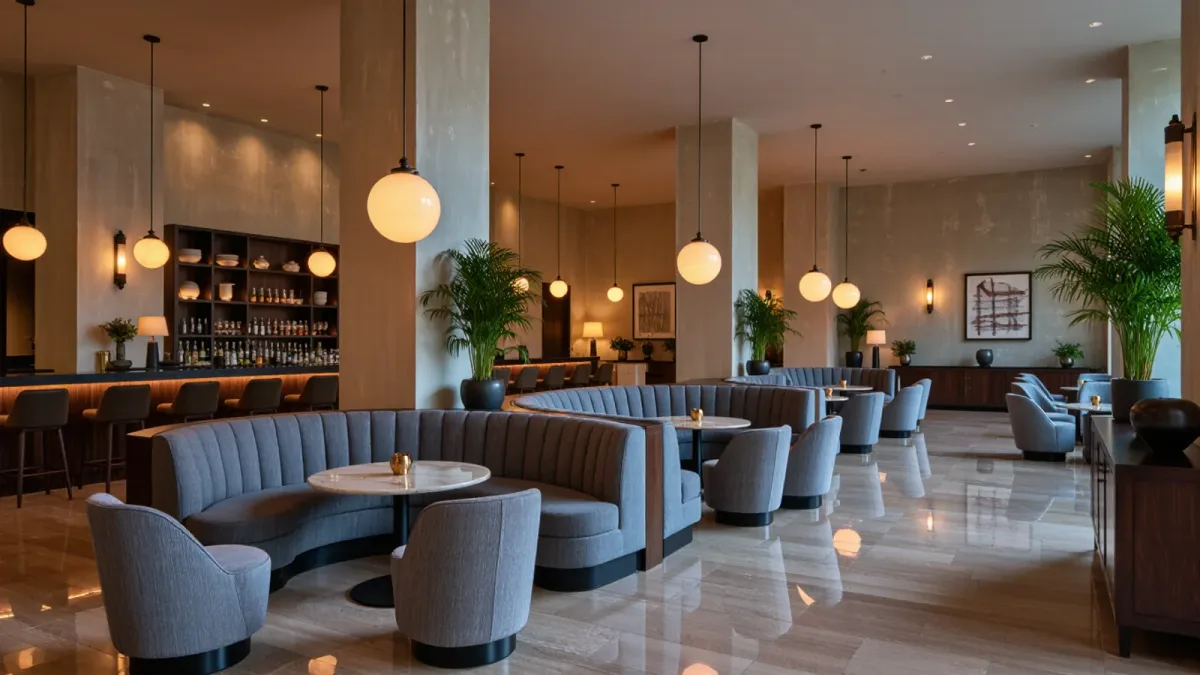
A lifestyle hotel is a property whose brand identity lives in its design — distinctive interiors, a bar and lobby programmed as social space, art, music and uniforms that together read as one authored point of view — rather than in a standardized room prototype repeated across a portfolio. The segment grew because travelers began choosing places that photograph as an identity, and owners began charging for it.
For operators and owners, the model changes what the brand asset is and how often it must be renewed.
How is a lifestyle brand different from a conventional hotel brand?
A conventional brand standardizes: the same room, the same signage and the same arrival experience in every city, so the guest knows the product before walking in. A lifestyle brand does the opposite — it guarantees a sensibility, not a prototype. Each property is designed individually, often with local materials and named designers, while the brand enforces the sensibility: palette discipline, music, scent, service rituals, the bar as social engine.
The consequence for operators is that brand compliance is judged less by checklists and more by whether the property still photographs and feels like the brand. That is a harder thing to audit — and a faster thing to lose.
Related stories: Why the brand dictates the bathroom: inside hotel design standards and the PIP cycle · The lobby became the product: how hotel lobbies turned into offices, bars and revenue floors.
What does the design carry commercially?
In the lifestyle model, the public spaces earn revenue and the design earns rate. The lobby bar is often the profit center; the interiors justify an ADR premium over comparable commodity rooms in the same market; and the visual identity is the marketing, because guest photos on social platforms do the distribution a legacy brand buys with advertising. Properties in this segment are, in effect, content factories — and the design budget is best understood partly as a marketing budget.
For owners, that reframes capital planning: interiors are not depreciation to be minimized but the revenue asset to be refreshed.
How often does the look need renewal?
Faster than a conventional product. Standardized rooms amortize FF&E over long cycles because the brand promise is consistency; a lifestyle property's promise is currency, and design currency ages in years, not decades. Operators typically plan for periodic refreshes of high-visibility surfaces — lobby vignettes, bar backdrops, the most-photographed corners — on shorter cycles than full room renovation, keeping the property's visual output current without gutting keys.
Who bears the risk?
The design-led model concentrates risk in taste. A look that reads dated, or a designer whose style outruns the market, shows up directly in rate and in social distribution. Operators manage this by testing design concepts against the actual booking guest — not the press audience — and by keeping the expensive fixed elements (architecture, layout, wet areas) neutral while spending the expressive budget on elements that can be changed: paint, textiles, lighting, art, furniture.
Lifestyle branding is a promise that a building will keep feeling current. The operators who keep that promise cheaply are the ones who designed for change on day one.