
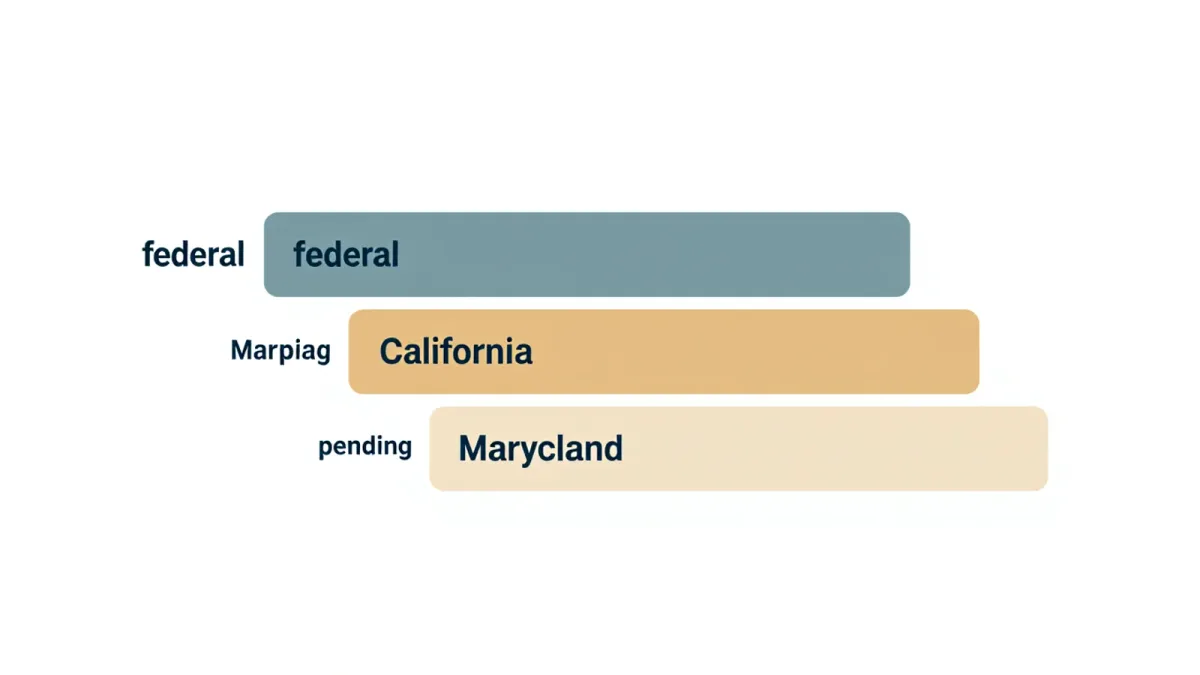
US travelers booking hotels in May 2026 are covered by two or three layers of mandatory-fee disclosure at once: the FTC's Rule on Unfair or Deceptive Fees, in effect since May 12, 2025; California's SB 478 and its hotel-specific SB 1350, in effect since July 1, 2024; and Maryland's parallel lodging fee transparency law, effective 2025. A further bill, the federal Hotel Fees Transparency Act (S.314), sits pending in Congress, per congress.gov.
The layers matter to travelers because enforcement differs by state — and because a resort fee that survives scrutiny must now appear in the first price a guest sees, not the last.
The federal baseline
The FTC rule requires the total price — every mandatory fee, resort or destination fees included — to be displayed clearly and conspicuously whenever a price is advertised, for hotels, motels, and vacation rentals alike, per the FTC. It bans the fee from appearing mid-checkout or at the desk, though it does not ban the fees themselves. Civil penalties for violations can exceed $50,000, per enforcement guidance reported by CNBC.
Related stories: Booking direct or through an OTA: the fee rules now apply to both, so compare the totals · Resort fees must appear in the advertised price: the FTC rule hotels now book under.
The state layer on top
California goes further in two respects: SB 1350 requires fee disclosure at or before booking with specific display requirements, and the California Hotel & Lodging Association publishes compliance guidance that effectively sets the display standard many chains apply nationally, per the association's FAQ. Maryland's law similarly requires advertised total pricing for lodging. In these states, a traveler can treat any advertised price without mandatory fees as a compliance failure, not a negotiation.
What a traveler can do with the overlap
Three moves follow from the current rule stack. First, compare listings on the displayed total — the comparison is now legally meaningful, since every covered seller must quote the same all-in basis. Second, when a mandatory fee surfaces after selection, report it: to the FTC federally, and to the state attorney general in California or Maryland, where the state laws add an enforcement channel independent of federal action. Third, for taxes on top of the room rate — which are required disclosures, not junk fees — check the itemization on the final confirmation against the resort's published tax schedule.
The fee transparency regime is now stable enough to plan around: one federal floor, stricter state ceilings, and pending federal legislation that would codify the standard. The number that matters remains the first one a booking page shows.